Thursday, July 14, 2016

What Polynesian Culture Has to Teach Us About Sustainability

Today we want to draw your attention to a group that’s doing some really amazing work to spread the word about sustainability, world peace, and Polynesian culture: The Hokulea Polynesian Voyaging Society. This organization is midway through a worldwide voyage across the world’s oceans.
The catch? They’re making the voyage in traditional-style Polynesian voyaging canoes, and are navigating using only traditional Polynesian wayfinding methods. That means no GPS — not even compasses! So far they’re right on track. You can check out their route by clicking here. They’ve travelled from Hawaii, between Australia and Indonesia, around the coast of Africa, up South America, and are currently making their way up the North American coast. They plan to reach New York by the first week of June, in time for UN World Oceans Day.
We have long been inspired by the tremendous wisdom behind this group’s sustainability ethic, as well as by what we’ve learned of Polynesian society from the ethnobotanists who have come to talk to us about the traditional uses of noni. We’d love to share some of this knowledge with you, in the hopes that it inspires you to live just a little bit more with Planet Earth in mind!

Live With an Island Mindset

A big part of the intent of the Worldwide Voyage is collecting, sharing, and spreading wisdom about our planet, particularly with regards to sustainability. According to their website, “Living on an island chain teaches us that our natural world is a gift with limits and that we must carefully steward this gift if we are to survive together.”
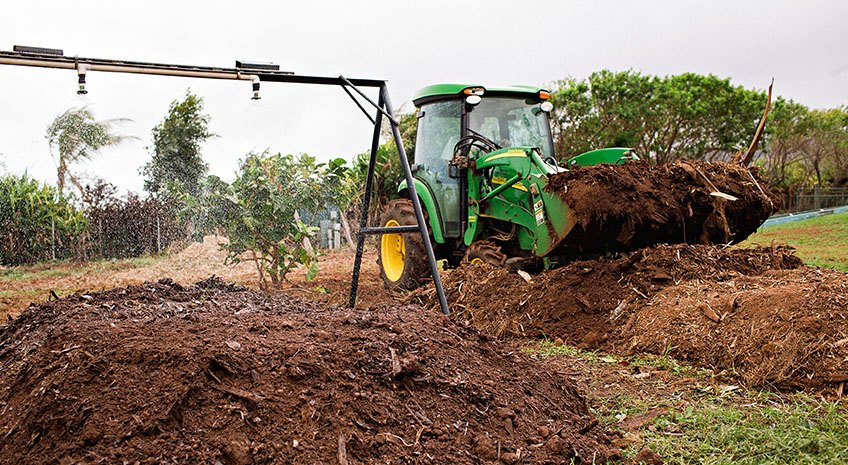
This is very similar to the ethic of organic agriculture, which is obviously very important to us as certified organic farmers. We’ve seen it proven season after season how critical it is to protect and replenish the earth’s fertility and resources, which we do using mulch, compost, vermiculture, and our no-till system.
Earth is not a closed system, and there are many renewable resources available to us, but only if we respect their limits. We must replenish what we use and conserve where we can. Polynesian islanders understood this, simply because their world was literally an island. Polluting their resources or depleting the soil simply wasn’t an option.

It’s Possible to Modify the Land Responsibly

Many environmentalists today get so caught up in conservation that they see any modification to the land as a negative. But it’s possible to modify the land so it’s productive, diverse, and self-sustaining, while still reaping some benefits for us as humans.
This is the goal of real organic farming. We want to develop systems that are good for humans, but which also benefit the land. The Polynesian settlers brought noni saplings and seeds with them when they came to Hawaii, and the hardy tree has happily taken up residence here, providing habitat for many animals and a good food source for others.

Read how to let your foods heal you in the original blog here!

In what ways do you try to “live like an islander” in terms of sustainability? Let us know in the comments!

Monday, July 11, 2016

What On Earth’s Compost Tea? And How Can It Help My Garden?

In honor of planet Earth, we’ve been covering lots of different organic methods we use on the farm, particularly techniques to improve soil fertility. Here’s the last post in the series — hopefully you’ve gotten lots of inspiration to bring some of these practices into your own garden.
All of the organic practices we do on our farm are about mimicking what nature does naturally, and compost tea is no exception. Compost tea is a powerful tool in any gardener’s arsenal, and it’s not for drinking! Basically, compost tea is a nutrient-dense spray for the leaves of your plants.
Sound crazy? Ineffective? Possibly unsafe? We promise it’s none of those things, and we’ll let you know exactly how we do it.

What’s Nature’s Version of “Compost Tea?”

Have you noticed how plants always turn vibrantly green after it rains? This is actually not due to the added water — it’s due to nature’s version of compost tea!
There’s much more nitrogen floating around in the air than there is in the ground. When rain falls from the sky, the water molecules pick up some of that nitrogen and deposit it on the leaves of plants. The leaves can then absorb some of those nutrients through their skin and their pores (called stomata)
Farmers and gardeners borrow this concept by spraying a diluted, biologically active compost mix directly on the leaves of plants. Basically, we steep compost and worm castings in water, and then collect the liquid to use as a foliar spray.

Does It Really Work?

We’ve used this spray on our noni trees for many years, and we believe it’s part of the reason why they grow such nutritious fruits 12 months of the year. But a while back, we had an opportunity to do a real test of how well compost tea works.
My son was spraying compost tea on our noni trees as usual, and he ended up with a little extra — enough to spray one of our two rows of banana trees. So he sprayed the one row, and then forgot about it. Four days later, I was out at the banana trees with a group, and I realized that the trees that had been sprayed were a full 2 feet taller than the un-sprayed trees! That’s enough evidence for me.

How Can I Get Started?

We promise, this is something you can do yourself!

Read How to Get Started With Great Compost in the Original Blog!

Steep Away

Once you have a good source of compost and/or worm castings, all you need is a steeping container. It’s most important to seek out a container that you can oxygenate, to get a more lively, active compost tea.
You can use a fish aquarium, and keep in the aerator pump. Or if you’d like to buy a system, a company called Growing Solutions has a variety of compost tea systems, which all aerate your compost tea as it steeps.
The oxygen allows the populations of the beneficial microbes found in your compost and worm castings to grow into the billions. We also recommend adding just a little molasses to feed your microbes while  their population is growing, for best results.

How to Apply

We always spray our compost tea in the late afternoon, because that timing works out best for a plant’s respiration cycle. Plants are busy photosynthesizing in morning and early afternoon, and the stomata (pores) in their leaves close up to prevent much-needed water from evaporating in the heat of the day. In the late afternoon, those pores open up and will stay open all night.
Just give your leaves a good spray and you’ll be on your way to greener, happier plants that produce more nutritious fruits and vegetables!
Have you tried making compost tea at home? What were your results?

Thursday, July 7, 2016

The Importance of Animals on an Organic Farm: Pollinators, Pest Control, and Decomposers

In honor of our wonderful planet, we at Hawaiian Organic Noni are discussing and sharing the organic farming methods we use on the farm. We’ve also be sharing some information about the ethic of sustainability that informs every decision we make as farmers and as a business.
Today we’re discussing the role of animals on an organic farm. Chances are, when you think about the word “farm” in the abstract, you think of cows, sheep, pigs, chickens, and maybe also a barn cat and a herding dog for good measure. From our childhood, we’re taught that these animals are a vital part of what a farm is.
In reality, however, most American farms today are remarkably devoid of animals. Cows, pigs, and chickens have all been taken off the farm, to be raised almost exclusively on ranches and CAFOs (Concentrated Animal Feedlot Operations). Even insects have no place on the modern industrial farm — they’re killed off by large amounts of toxic pesticides. Indeed, most farms today are a monoculture of just one crop, usually soybeans or corn.
This lack of diversity has serious consequences for the fertility of plants, defense against pests, and the quality of the soil.

Pollinators

Probably the most important animals on any farm are the pollinators. Without them, most of the food crops we currently enjoy would not exist. And with populations of honeybees and other pollinators on the decline, that’s starting to become a very real concern.
Scientists aren’t sure yet exactly what’s causing the mass bee die-offs we’ve been seeing in the last 20 years, but they have some theories. Synthetic pesticides are almost certainly a contributing factor. The pesticides are supposed to be administered in a dose that’s non-lethal to bees, but it’s becoming clear that even a low dose can cause disorientation, weakness, and sickness. And who knows what the effects are of low long-term exposure?
On our organic farm, we do all we can to support our friends the pollinators. In fact, there are over 45 beehives on our organic farm. We believe that offering them a wide diversity of plants to visit is beneficial, so we grow a wide variety of tropical flowers and fruits on our farm in addition to the noni.Click here to learn more about the role of honeybees on a noni farm — it’s a little unusual!

Pest Defenders

Another very important reason to support a healthy diversity of animals on a farm is their ability to deter pests. The stereotypical mouser cat is one example, but chickens, spiders, and beneficial insects are also critical for keeping pest populations under control. Have you ever seen a chicken chase a grasshopper?
When modern industrial agriculture uses herbicides and pesticides to try to maintain their monocultured fields, they’re trying to bypass their need for these pest-controlling animals. It works in the short term, but in the long run, pests are great at evolving to outstrip our chemical warfare. They build up resistance to our chemical warfare, requiring the use of more and more concentrated harmful chemicals.
Organic farms, like ours, use systems of Integrated Pest Management to suppress and prevent pests, rather than eradicating them. You can learn more about this approach by clicking here.

Learn about the most important animal, decomposers, on the original blog!

Animals can be incredibly useful in a backyard ecosystem too! There are lots of ways to support wild and domesticated pollinators, pest-controllers, and decomposers on your land. Just ask us if you’d like some tips!

Monday, July 4, 2016

An Unmissable Northern Kauai Adventure

Taking a trip to Hawaii this year? Hopefully you have some time to make it to the Garden Isle, Kauai. If you do, make sure you make the drive up the North Shore, home of dramatic cliffs, gorgeous beaches, and lots of fascinating wildlife.
From the airport, you’ll travel north on Route 56, a coastal highway that crosses over the Wailua River and the several busy small towns before transitioning to a more rural and scenic landscape, with stunning views of the island's rugged interior mountains. The highway turns west and narrows after Anahola (site of a very beautiful beach loved by locals), where it passes by our organic farm up at the northeast corner of the island. The road then travels through Kilauea and Princeville before dropping down into Hanalei Valley.
This gorgeous coastal drive only takes an hour or two if you don’t stop (impossible given the scenery, we promise), so it makes a great day trip even if you’re spending the bulk of your time on Kauai in the south part of the island. Here are some stops you’ll have to make along the way.

Kaakaaniu Plantation

We recommend starting your day with a 10am free tour of our organic noni farm, located on beautiful Kaakaaniu Plantation. We’re located just a few miles south of the Kilauea Point National Wildlife Refuge, so there’s lots of wildlife to see on our land, as well as many gorgeous native plants. Our Organic Noni Farm & Wellness Tour is very highly rated on TripAdvisor — here are just a few testimonials from 2015.
You’ll also learn about noni fruit, which we grow on the farm and turn into Noni Fruit Leather andNoni Lotions. Noni fruit is known to help with a wide variety of health issues from diabetes to high blood pressure to pain and inflammation to skin ailments. We’ll share everything we know about this unusual fruit, including the growing body of scientific research about this fruit’s properties and traditional usages. We also spend about a half hour on our organic processes- mulch, compost, vermiculture and compost teas. Things that we do on a very large scale that you may do on a small scale in your home garden.

Kilauea Point National Wildlife Refuge

Here you can see many different species of birds, including possibly Laysan albatross. Many of these birds are very rare, or don’t often appear in the large numbers that frequent the wildlife refuge. There are also sea turtles, spinner dolphins, monk seals and, if you’re especially lucky, humpback whales! It all depends on the season and what the animals are up to.
Kilauea Point is also home to a very photogenic lighthouse, which you can tour if you plan ahead.
What are your favorite sights on the North Shore of Kauai? Let us know in the comments!

Thursday, June 30, 2016

An All Natural Treatment for Your Dog’s Hot Spots

Is there anything more heartbreaking than a dog that’s sick or in pain? In particular, hot spots can be devastating to watch. They are often extremely sensitive and painful, and your pet’s own instincts — to lick, chew and scratch the area — only make things worse.
Worse yet, many common treatments for hot spots include harsh chemicals, invasive antibiotics, and painkillers with lots of potential side effects. Talk to your vet and use those treatments if absolutely necessary, but you may be able to treat hot spots with a much more gentle, organic solution: noni!

What Are Hot Spots?

First, some information about what exactly your pet is going through. Hot spots, also known as moist dermatitis or superficial canine pyoderma, are inflamed, infected sores on the skin, often resulting from bacterial infection on the skin. Hot spots can also be caused by allergic reactions, poor grooming, and bites from insects or arachnids.
Anything that irritates your dog’s skin and causes him or her to start licking, chewing, and scratching the area can turn into a hot spot. In particular, the combination of an open wound, moisture, and continued irritation is a recipe for painful hot spots. They’re most likely to form on the dog’s head, chest, or hips, but can form elsewhere as well.
Hot spots usually redden, accompanied by wet scabbing, oozing, and increased inflammation and itching. There may even be an odor resulting from the infection. The area will most likely become sensitive to the touch, so be very gentle with your furry friend when treating the spots.
Treatment involves soothing the spots and protecting them from further damage. Most importantly, however, you and your vet will need to determine the root cause of the hot spots so they don’t just come right back.
You can learn more about hot spots by clicking here, but remember that you may be able to avoid some of the harsh treatments listed there!

Learn the First Steps to Healing Hot Spots on the original blog!

Noni: Treating Hot Spots on Two Fronts

Many of the topical treatments for hot spots are full of potentially harmful chemicals, including excessive antibiotics, steroids, and painkillers. These treatments may have side effects which could harm your pet, especially if your pet manages to lick some!
Luckily, nature has provided us with an unusual fruit that works both from the outside in and the inside out to heal skin conditions like this. It works for humans, and it works for your furry friends, too! Raw noni fruit is powerful, and has stood the test of time as a natural remedy for thousands of years.
But how does it work?

From the Outside: Soothes and Heals

Raw pulp from the noni fruit includes 165+ beneficial compounds, including a powerful painkilling, anti-inflammatory, and antibacterial compound called scopoletin. One study said that noni’s painkilling power was comparable to hydrocortisone, but without any side effects or toxic level.
Other compounds in noni help resist parasites and treat infection. Click here to learn about the top 4 most beneficial compounds in noni fruit.
To treat hot spots topically, we recommend our Pets Lavender Noni Lotion. This gentle formula is made of pure, organic, raw noni pulp, mixed with water, grapefruit seed extract, and organic lavender oil. It’s the same formula as we sell for humans, but in a bottle with cute animals and an easy animal-friendly applicator tip.
You can apply this topical treatment multiple times per day. The best part is, even if your pet does lick off some of this lotion, it’s actually beneficial! Of course, you’ll want to prevent your dog from licking the hot spots as much as possible, whether with a plastic cone collar, bandage, or t-shirt.

From the Inside: Repairs and Prevents

Unless you also treat the underlying cause of the hot spots, whether it’s parasites, underlying infection, stress, or an allergic reaction, you’ll have a hard time completely healing them and preventing a resurgence.
That’s why we recommend also giving your pet a daily dose of Pets Noni Fruit Leather! This raw food has a wide variety of benefits for pets, including many that may help eliminate and prevent hot spots.
  • Boosts Immunity: Good for regulating allergic reactions and infection
  • Kills/Repels Parasites: Worst enemy of insects, arachnids, & worms — learn more!
  • Prevents Infection: Strong antimicrobial properties
  • Relieves Inflammation: Reduces pain and allows infection to heal
  • Improves Mood: Lowers stress levels and helps with anxious habits
For larger dogs, we recommend about two 2x2 inch pieces per day while the hot spots are healing, spread out throughout the course of the day. For smaller dogs, start with one piece per day and move up to two if symptoms do not improve.
Once you get those hot spots under control, continue giving a 2x2 inch piece per day for preventative care and to continue reaping the many benefits of this powerful healing fruit!
Have you used noni to treat hot spots? Let us know in the comments!

An All Natural Cure for Your Dog’s Hot Spots

Is there anything more heartbreaking than a dog that’s sick or in pain? In particular, hot spots can be devastating to watch. They are often extremely sensitive and painful, and your pet’s own instincts — to lick, chew and scratch the area — only make things worse.
Worse yet, many common treatments for hot spots include harsh chemicals, invasive antibiotics, and painkillers with lots of potential side effects. Talk to your vet and use those treatments if absolutely necessary, but you may be able to treat hot spots with a much more gentle, organic solution: noni!

What Are Hot Spots?

First, some information about what exactly your pet is going through. Hot spots, also known as moist dermatitis or superficial canine pyoderma, are inflamed, infected sores on the skin, often resulting from bacterial infection on the skin. Hot spots can also be caused by allergic reactions, poor grooming, and bites from insects or arachnids.
Anything that irritates your dog’s skin and causes him or her to start licking, chewing, and scratching the area can turn into a hot spot. In particular, the combination of an open wound, moisture, and continued irritation is a recipe for painful hot spots. They’re most likely to form on the dog’s head, chest, or hips, but can form elsewhere as well.
Hot spots usually redden, accompanied by wet scabbing, oozing, and increased inflammation and itching. There may even be an odor resulting from the infection. The area will most likely become sensitive to the touch, so be very gentle with your furry friend when treating the spots.
Treatment involves soothing the spots and protecting them from further damage. Most importantly, however, you and your vet will need to determine the root cause of the hot spots so they don’t just come right back.
You can learn more about hot spots by clicking here, but remember that you may be able to avoid some of the harsh treatments listed there!

Learn the First Steps to Healing Hot Spots on the original blog!

Noni: Treating Hot Spots on Two Fronts

Many of the topical treatments for hot spots are full of potentially harmful chemicals, including excessive antibiotics, steroids, and painkillers. These treatments may have side effects which could harm your pet, especially if your pet manages to lick some!
Luckily, nature has provided us with an unusual fruit that works both from the outside in and the inside out to heal skin conditions like this. It works for humans, and it works for your furry friends, too! Raw noni fruit is powerful, and has stood the test of time as a natural remedy for thousands of years.
But how does it work?

From the Outside: Soothes and Heals

Raw pulp from the noni fruit includes 165+ beneficial compounds, including a powerful painkilling, anti-inflammatory, and antibacterial compound called scopoletin. One study said that noni’s painkilling power was comparable to hydrocortisone, but without any side effects or toxic level.
Other compounds in noni help resist parasites and treat infection. Click here to learn about the top 4 most beneficial compounds in noni fruit.
To treat hot spots topically, we recommend our Pets Lavender Noni Lotion. This gentle formula is made of pure, organic, raw noni pulp, mixed with water, grapefruit seed extract, and organic lavender oil. It’s the same formula as we sell for humans, but in a bottle with cute animals and an easy animal-friendly applicator tip.
You can apply this topical treatment multiple times per day. The best part is, even if your pet does lick off some of this lotion, it’s actually beneficial! Of course, you’ll want to prevent your dog from licking the hot spots as much as possible, whether with a plastic cone collar, bandage, or t-shirt.

From the Inside: Repairs and Prevents

Unless you also treat the underlying cause of the hot spots, whether it’s parasites, underlying infection, stress, or an allergic reaction, you’ll have a hard time completely healing them and preventing a resurgence.
That’s why we recommend also giving your pet a daily dose of Pets Noni Fruit Leather! This raw food has a wide variety of benefits for pets, including many that may help eliminate and prevent hot spots.
  • Boosts Immunity: Good for regulating allergic reactions and infection
  • Kills/Repels Parasites: Worst enemy of insects, arachnids, & worms — learn more!
  • Prevents Infection: Strong antimicrobial properties
  • Relieves Inflammation: Reduces pain and allows infection to heal
  • Improves Mood: Lowers stress levels and helps with anxious habits
For larger dogs, we recommend about two 2x2 inch pieces per day while the hot spots are healing, spread out throughout the course of the day. For smaller dogs, start with one piece per day and move up to two if symptoms do not improve.
Once you get those hot spots under control, continue giving a 2x2 inch piece per day for preventative care and to continue reaping the many benefits of this powerful healing fruit!
Have you used noni to treat hot spots? Let us know in the comments!

Monday, June 27, 2016

How Noni Fruit Leather Naturally Brightens Your Mood

Do you suffer from frequent cases of the blues? Have trouble getting out of bed in the morning or motivating yourself to keep going through the afternoon? These symptoms don’t mean you’re weak — in fact, they mean that you’re persevering against incredible adversity from within your very own body.
Scientists still only have a tenuous understanding of the human mind and how it impacts well-being. What we do know is that the mind is closely linked with the body. Chemical levels in your brain impact how your body feels, and the nutrition you take into your body impacts brain function. A tiny imbalance can have huge impacts on your mood, energy levels, physical symptoms, and more.
We can’t stress enough the importance of food in this equation. In today’s pharmaceutical-driven society, we’re told that the only way to adjust mood is through strong medications with many known common side effects.
But food is nature’s true medicine, and the earth has provided us with many ways to take control of our own mental and physical health — including noni, an unusual tropical fruit that has been used for healing over thousands of years. Modern science is only just starting to unlock noni fruit’s potential to positively impact both mind and body. Here’s what we’ve learned so far!

How Does Food Affect Mood?

Most experts now agree that food is much, much more than a simple equation of input/output, calories in versus calories out. The specific nutrients in food, whether it’s whole, raw food, highly-processed junk, or somewhere in between, impact how your body and brain work together. The effect can be positive or negative, depending on the specific food, your natural brain chemistry, and your context.
Here are some of the known ways that food and mood interact:

Depression

We’ve always known that mental states, depression in particular, impact the way we eat. Sometimes depression causes overeating, sometimes under eating, sometimes a craving for specific foods. But did you know that the foods you eat likewise impact depression?
An unhealthy diet (high in sugar & processed foods) is a major risk factor for depression, according to this study. That means, when you’re depressed, you very well might crave foods that could make your depression worse.
Turning a pattern like this around can be a big challenge, especially because your mind and body will most likely be fighting you. But introducing a simple mood-boosting raw food into your diet, like Noni Fruit Leather, is a low-effort way to start reversing that momentum!

Sugar Addiction

Simple, processed carbohydrates convert very quickly into glucose in the bloodstream, which your body turns into energy. Because those foods convert so quickly and all at once, they put serious strain on your body’s systems for processing sugar.
All that extra sugar might feel good while it lasts (or you might feel shaky, jittery, or manic), but there are some harmful things going on. Particularly if you frequently have a lot of sugar, you’re increasing your risk for the following:
  • Type 2 diabetes
  • Addiction to sugar
  • Increased numbers of “bad” gut bacteria
  • Weakened immune response
  • Inflammation-related diseases
Plus, when the crash inevitably does come, you’re likely to wind up feeling even worse. If you reach for sugar for another mood and energy boost, you keep that addictive cycle going.

Brain Food

Then, of course, there are the many nutrients that actually have a positive impact on mood. In particular, omega-3 fatty acids are linked to reduction in anxiety and depression. They’re also widely known to be brain food.
Another nutrient you may have heard less about is selenium. A study from Texas Tech University showed that selenium supplementation of 200 micrograms a day for seven weeks improved mild and moderate depression in 16 elderly participants. Other studies have reported an association between low selenium intakes and poorer moods. Did you know noni fruit is a good source of selenium?
In general, if you eat foods that are more nutritionally dense, varied, and complete, your body will have more reserves of beneficial nutrients to send to your brain. Whatever specific nutrients future scientists link to brain health are certainly found in whole, raw foods like noni!

Noni

One of the first benefits many new Noni users notice is a mood and energy boost. I’ve been taking noni every day for many years, and I still love the pick-me-up it gives me. It’s perfect before a workout. But what is it about noni fruit that makes this mood lift possible?

Scopoletin & Serotonin

One of the compounds in noni of interest to modern science is scopoletin. Scopoletin is a phytochemical, a biologically active compound that is being studied primarily for its ability to relieve pain.
But scopoletin has another property: mood elevation. The compound is believed to improve mood and provide a little energy lift by binding with serotonin to keep levels elevated. You can learn more about this compound by clicking here.

Blood Sugar Regulation

One of noni’s other widely tested effects is its ability to regulate and stabilize blood sugar levels, even in diabetics. This is likely due in part to its high soluble fiber content. Just don’t make the mistake of taking noni juice, assuming it’s as healthy as Noni Fruit Leather! Besides the fermentation process used to make noni juice which destroys the beneficial nutrients, most noni juice products have added sweet juices and sugars to help improve the foul taste of the rotten and fermented juice. Independent Lab Research has shown our Noni Fruit Leather to be 14x more potent than noni juice.

How do you boost your mood when you’re feeling depressed, stressed, or anxious? Do you use noni? Let us know in the comments.