Showing posts with label organic farming. Show all posts

Friday, January 6, 2017

Noni: Organic To The Roots

At Hawaiian Organic Noni, it’s more than just about selling an organic product. It traces all the way back to our roots. From the very start we strive to keep everything organic, good for our planet, and good for you! With our organic farming experience going back forty years, the techniques we use ensure that our soil is fertile, healthy, and full of nutrients. One key technique is mulching.

Why Mulching?
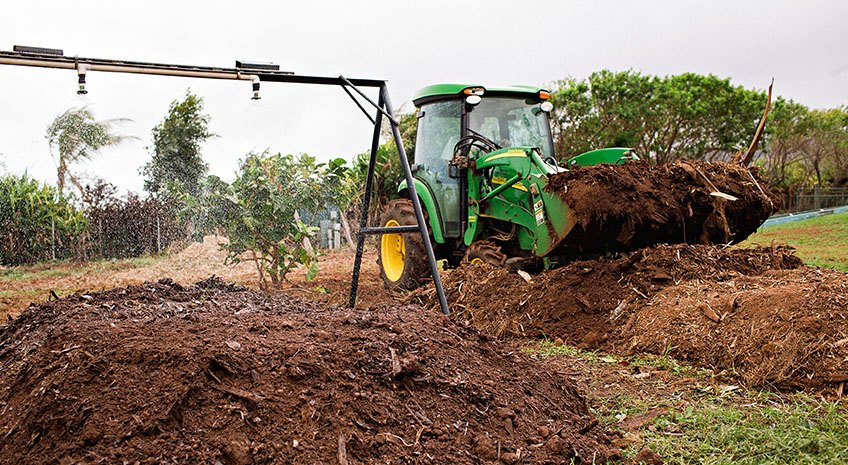
Mulching is one of the easiest ways to enrich soil fertility. Mulching essentially imitates the natural cycle of leaves, wood, and other plant matter building up on the ground to cover the soil. It retains moisture and creates an enticing environment for worms, the closest friend for healthy soil! On our organic farm on Kauai we make sure to continually mulch every single noni tree in our orchard. It keeps them growing and healthy, providing the trees with essential nutrients.
Try it in your own garden: Mulch around your plants and trees and you will see the positive results. You can use plant materials from around the yard like leaves, grass clippings, wood chips, even shredded paper and cardboard will work--minus the tape!

What else do you do besides mulching?

Mulching is one of the easiest ways to enrich soil fertility. Mulching essentially imitates the natural cycle of leaves, wood, and other plant matter building up on the ground to cover the soil. It retains moisture and creates an enticing environment for worms, the closest friend for healthy soil! On our organic farm on Kauai we make sure to continually mulch every single noni tree in our orchard. It keeps them growing and healthy, providing the trees with essential nutrients.
What’s your favorite Noni use? Let us know!

Thursday, July 21, 2016

Why It’s So Crucial to Know Your Farmers

These days, when “sustainability” is mainstream and everyone is throwing around phrases like “natural,” “organic,” and “responsibly grown,” it’s hard to navigate the tangle of words, rhetoric, and jargon to get at the truth of what’s best for our planet.
One of those little sound bites you’ve likely heard if you try to eat responsibly is, “Know your farmer.”
But do you understand why this is so important? Earth Day was last month and really should be talked about and practiced every day, so here at Hawaiian Organic Noni, we’re unpacking some of our company’s sustainability ethic, as well as explaining a few of the organic practices we use every day on the farm to do our part.
Today, let’s dive into that issue of knowing your farmers!

Food: The Faceless Commodity

Knowing your farmer is far from the norm in today’s industrial agricultural society. Most people buy food from supermarkets, which, despite the often colorful marketing language on food packaging, comprise an institution designed to turn food into a transactional commodity rather than a social, cultural experience.
But this trend starts way before the food reaches the supermarket. Since World War II, giant companies have been swallowing up America’s small and midsized farms in favor of enormous monocultures of corn and soybeans. These commodity products come to us in the form of processed foods, further removing us from the actual fields where farming is done.
The amount of time people spend engaged with shopping for and preparing their food is decreasing while the number of calories we eat steadily increases. We don’t think it’s a coincidence that there’s been a corresponding rise in heart disease, obesity, diabetes, and other “Western” diseases as a result.

Discover how you could be undernourished by not knowing your farmer in the original blog!

Farmers are Fun!

Finally, we want to get back to that idea of food as a cultural experience. That perspective is dying in this country as more of us buy food from self checkout, eat alone in our cars, and buy processed foods made by some of the biggest corporations in the world.
But farmers are pretty awesome people, with a lot to teach about food and nutrition! The best part is, most of us love to share what we know about nutrition, gardening, and sustainability with you. There’s no knowledge hoarding or industry secrets here. We believe transparency is the path back to food that is nutritious, sustainably-grown, and truly satisfying.
Get in touch with us! We love sending out our monthly newsletter to connect with you, and we post actively on social media.

Monday, July 18, 2016

Why Does Organic Matter to Hawaiian Organic Noni?

In honor of Mother Earth we’re focusing on sustainability, organic farming, and other ways we can help out our wonderful planet. We’ll be sharing how we do things on the farm, as well as tips to bring these techniques into your own home.
To us, sustainability means creating systems which ensure continued fertility, diversity, and vitality, benefiting humans, animals, plants, insects, fungi, and microbes for many years to come.
As we explore our sustainability ethic in the month to come, you can look forward to learning all about:
  • Vermicomposting (that’s composting with worms!)
  • Involving pollinators and other animals in agriculture
  • Importance of supporting family organic farms
  • The Laysan albatross sanctuary on our land
  • How sustainability and organic practices impact food quality and nutrition
But before we get started, we wanted to share with you just a few of the many reasons sustainability, and organic farming in particular, matter so much to us.

Small Scale Farming

The world is moving more and more toward industrial food systems, meaning fewer larger farms growing larger yields of fewer crops with more pesticides and more herbicides.
Most big farms only grow one or two crops, most often heavily subsidized corn and/or soybeans. The market is flooded with cheap corn and soybeans, and then it’s the market’s job to figure out a use for them.
Unfortunately, there are some very heavy hidden costs that go with industrial farming:
  • Edging out of small business farms and even medium-sized farms, putting farmers in debt
  • Dilution of “organic” standards, increased difficulty in regulation
  • Decreased diversity of plants, animals, and microbes
  • Increased agricultural runoff, potentially harmful to the environment
  • Increased consumption of processed foods, decreased nutrient intake
Later this month, we’ll discuss why it matters to the environment whether or not you know your farmer (even if you only know them online!)

Soil Fertility


Modern industrial agriculture places little emphasis on the long-term fertility of the soil, instead focusing on fertilizing intensively in the short term. Not only does this practice deplete the soil of nutrients over time, but it also causes runoff of toxic chemicals, decreased diversity, and the need to apply ever more fertilizers, herbicides, and insecticides to keep nature at bay.
We see it as our responsibility as farmers to return as many nutrients to the soil as we can in the form of mulch, compost, worm castings and compost teas. Not only does this improve the nutritional content of the food we grow, but it also ensures the long-term ability of this land to stay productive over the years.


What are some of your best practices with regards to sustainability and protecting planet Earth? Let us know in the comments!

Monday, July 11, 2016

What On Earth’s Compost Tea? And How Can It Help My Garden?

In honor of planet Earth, we’ve been covering lots of different organic methods we use on the farm, particularly techniques to improve soil fertility. Here’s the last post in the series — hopefully you’ve gotten lots of inspiration to bring some of these practices into your own garden.
All of the organic practices we do on our farm are about mimicking what nature does naturally, and compost tea is no exception. Compost tea is a powerful tool in any gardener’s arsenal, and it’s not for drinking! Basically, compost tea is a nutrient-dense spray for the leaves of your plants.
Sound crazy? Ineffective? Possibly unsafe? We promise it’s none of those things, and we’ll let you know exactly how we do it.

What’s Nature’s Version of “Compost Tea?”

Have you noticed how plants always turn vibrantly green after it rains? This is actually not due to the added water — it’s due to nature’s version of compost tea!
There’s much more nitrogen floating around in the air than there is in the ground. When rain falls from the sky, the water molecules pick up some of that nitrogen and deposit it on the leaves of plants. The leaves can then absorb some of those nutrients through their skin and their pores (called stomata)
Farmers and gardeners borrow this concept by spraying a diluted, biologically active compost mix directly on the leaves of plants. Basically, we steep compost and worm castings in water, and then collect the liquid to use as a foliar spray.

Does It Really Work?

We’ve used this spray on our noni trees for many years, and we believe it’s part of the reason why they grow such nutritious fruits 12 months of the year. But a while back, we had an opportunity to do a real test of how well compost tea works.
My son was spraying compost tea on our noni trees as usual, and he ended up with a little extra — enough to spray one of our two rows of banana trees. So he sprayed the one row, and then forgot about it. Four days later, I was out at the banana trees with a group, and I realized that the trees that had been sprayed were a full 2 feet taller than the un-sprayed trees! That’s enough evidence for me.

How Can I Get Started?

We promise, this is something you can do yourself!

Read How to Get Started With Great Compost in the Original Blog!

Steep Away

Once you have a good source of compost and/or worm castings, all you need is a steeping container. It’s most important to seek out a container that you can oxygenate, to get a more lively, active compost tea.
You can use a fish aquarium, and keep in the aerator pump. Or if you’d like to buy a system, a company called Growing Solutions has a variety of compost tea systems, which all aerate your compost tea as it steeps.
The oxygen allows the populations of the beneficial microbes found in your compost and worm castings to grow into the billions. We also recommend adding just a little molasses to feed your microbes while  their population is growing, for best results.

How to Apply

We always spray our compost tea in the late afternoon, because that timing works out best for a plant’s respiration cycle. Plants are busy photosynthesizing in morning and early afternoon, and the stomata (pores) in their leaves close up to prevent much-needed water from evaporating in the heat of the day. In the late afternoon, those pores open up and will stay open all night.
Just give your leaves a good spray and you’ll be on your way to greener, happier plants that produce more nutritious fruits and vegetables!
Have you tried making compost tea at home? What were your results?

Thursday, July 7, 2016

The Importance of Animals on an Organic Farm: Pollinators, Pest Control, and Decomposers

In honor of our wonderful planet, we at Hawaiian Organic Noni are discussing and sharing the organic farming methods we use on the farm. We’ve also be sharing some information about the ethic of sustainability that informs every decision we make as farmers and as a business.
Today we’re discussing the role of animals on an organic farm. Chances are, when you think about the word “farm” in the abstract, you think of cows, sheep, pigs, chickens, and maybe also a barn cat and a herding dog for good measure. From our childhood, we’re taught that these animals are a vital part of what a farm is.
In reality, however, most American farms today are remarkably devoid of animals. Cows, pigs, and chickens have all been taken off the farm, to be raised almost exclusively on ranches and CAFOs (Concentrated Animal Feedlot Operations). Even insects have no place on the modern industrial farm — they’re killed off by large amounts of toxic pesticides. Indeed, most farms today are a monoculture of just one crop, usually soybeans or corn.
This lack of diversity has serious consequences for the fertility of plants, defense against pests, and the quality of the soil.

Pollinators

Probably the most important animals on any farm are the pollinators. Without them, most of the food crops we currently enjoy would not exist. And with populations of honeybees and other pollinators on the decline, that’s starting to become a very real concern.
Scientists aren’t sure yet exactly what’s causing the mass bee die-offs we’ve been seeing in the last 20 years, but they have some theories. Synthetic pesticides are almost certainly a contributing factor. The pesticides are supposed to be administered in a dose that’s non-lethal to bees, but it’s becoming clear that even a low dose can cause disorientation, weakness, and sickness. And who knows what the effects are of low long-term exposure?
On our organic farm, we do all we can to support our friends the pollinators. In fact, there are over 45 beehives on our organic farm. We believe that offering them a wide diversity of plants to visit is beneficial, so we grow a wide variety of tropical flowers and fruits on our farm in addition to the noni.Click here to learn more about the role of honeybees on a noni farm — it’s a little unusual!

Pest Defenders

Another very important reason to support a healthy diversity of animals on a farm is their ability to deter pests. The stereotypical mouser cat is one example, but chickens, spiders, and beneficial insects are also critical for keeping pest populations under control. Have you ever seen a chicken chase a grasshopper?
When modern industrial agriculture uses herbicides and pesticides to try to maintain their monocultured fields, they’re trying to bypass their need for these pest-controlling animals. It works in the short term, but in the long run, pests are great at evolving to outstrip our chemical warfare. They build up resistance to our chemical warfare, requiring the use of more and more concentrated harmful chemicals.
Organic farms, like ours, use systems of Integrated Pest Management to suppress and prevent pests, rather than eradicating them. You can learn more about this approach by clicking here.

Learn about the most important animal, decomposers, on the original blog!

Animals can be incredibly useful in a backyard ecosystem too! There are lots of ways to support wild and domesticated pollinators, pest-controllers, and decomposers on your land. Just ask us if you’d like some tips!

Monday, March 21, 2016

Our Journey with Noni

When my wife and I moved to Kauai, back in 1982, we could never have imagined where we’d be today. We certainly didn’t realize that the noni trees that were everywhere in our valley would have such a big impact on our health, or that we would have the opportunity to share something so special with people all over the world. 
With a new year starting, I wanted to take some time to reflect on our journey with noni. Remember, it’s never too late to start the next phase in your own life journey, whether that means taking new steps to put your health and family first, or whether it’s starting an exciting new business!

Right Place, Right time

Moving to Kauai from our organic farm in California, we knew we were making a new beginning, but we didn’t know how big of a story we were starting!
When we arrived on our new land, there were no roads, no electricity, no running water, and no buildings. We truly were starting from scratch!
Fortunately, we were starting from scratch in a land of abundance. Not only was there plenty of sunshine, ample precipitation, and potential for wind power, but the valley was also full of noni trees.

The Proof is In the Pudding

You know the saying “the proof is in the pudding?” It just means that you have to try something to know for sure what it’s about. It’s true of pudding, and it’s certainly also true of noni fruit.
We didn’t come to Kauai to farm noni. When we first arrived, I didn’t know anything about noni, or its impact on health. As we talked with older Polynesians and Hawaiians, we heard over and over about the power of noni — specifically, the power of the raw noni pulp, not the noni juice that is commonly sold today. But just words have never been enough to convince me of anything — I needed proof!
I saw friends being healed from chronic conditions, and when I tried noni for myself, I noticed a change in my energy levels right away. Over time, I found that I simply didn’t get sick anymore. As I’ve aged, I’ve been so thankful for noni’s ability to help me stay looking and feeling younger.
But what’s truly proved the power of noni to me is seeing the testimonials that have come in from you, our family of customers. Need some evidence yourself? Check out our testimonial page!

The Body of Evidence

What I experienced and saw was enough to get me interested in noni, and the more I learned about the science behind the anecdotal evidence, the more impressed I was. Researchers at the University of Hawaii, at the University Clinic in Hamburg, Germany, and all over the world are bringing in new results all the time showing noni’s ability to heal the body, prevent illness and injury, and relieve pain.
Here are just a few of the studies that have been done recently:
  • UBE Analytical Laboratories: Found Noni Fruit Leather contains 340,000 ORAC (antioxidant) units per 100 grams, beating out pomegranates, apples, and other antioxidant-high foods
  • Researchers from University Clinic in Hamburg Germany: Reported that noni fruit “reduced the pain sensitivity comparably to the central analgesic drug tramadol.” When extracts of noni fruitpuree were applied, the “effect was comparable to hydrocortisone.”
  • Acta Pharmacologica Sinica: Published a study showing noni is 75% as strong as morphine, as a central analgesic (pain-reliever), with no toxic level or side effects.

Building a Business

We realized that we wanted to share the power of noni with the rest of the world, but we needed a business model to do it. We knew we didn’t want to be like other companies that sell noni: multi-level marketing schemes, private labels, and other practices that take control away from the growers.
Today, Sunrise Organic Farm and Hawaiian Organic Noni are a 37 acre, family-owned and operated, certified organic farm, with an FDA certified organic Kitchen processing facility. We grow our own Noni, pick the fruit, process the products, package, and distribute ourselves.
We have maintained total control over every aspect of growing our organic trees, processing our fruit, and offering our products directly to you through our website, practitioners, or stores. This business model is very important to us. It protects us,the environment, and most importantly, you, our customers.

Noni Fruit Leather is Born

In the beginning of our journey with Noni, we only produced our Noni Fruit Leather, which is pure raw food from the non-fermented pulp of the fruit. Noni Fruit Leather was our solution to the major problem of distributing raw noni fruit: As soon as the fruit is picked it begins to ripen and within hours of ripening noni starts a rapid fermentation process.
Many people solve this problem either by letting the fruit ferment fully before distributing it, in the form of noni juice. Unfortunately, this destroys nearly all of the beneficial compounds in noni, and completely changes the chemical structure.
Through trial and error, we found that we could stop the fermentation process by simply removing the water from the raw noni pulp. This allowed us to preserve all those beneficial compounds.
We had to develop a unique dehydration system to accomplish this. Most fruit leathers or "fruit roll ups" are dried in just 10-12 hours, at a high heat above 140 degrees F. Our Noni Fruit Leather takes over 60 hours to dry, never going above 115 degrees F. Any higher heat than that destroys enzymes and beneficial compounds.
From our own personal experiences consuming the Noni Fruit Leather, we knew we had captured the potency of the pulp through our unique low heat dehydration system. We had our results confirmed by an independent lab, and found that our fruit leather is 14x more potent than noni juice.

Noni for Skin

We started making our Noni Lotions after receiving emails, letters, and calls from customers who had mixed our Noni Fruit Leather into water and applied it to the skin with amazing results. They found that it quickly got rid of pain and a variety of skin ailments.
It took several years of development to refine the lotion formulas, but the response has been fantastic. The lotions can relieve pain almost instantaneously and address skin conditions like eczema and psoriasis.
We now offer our Noni Lavender Lotion for skin conditions and pain relief (more general in use) or our IcyHeat Noni Lotion with menthol crystals and camphor oil specifically for pain relief or inflammation. For even faster pain relief, try our IcyHeat Sports Formula, which contains 1% more menthol and camphor.

Read about our promise for the future with our original post.

Wednesday, March 9, 2016

12 Months of Testimonials from the Noni Farm Tour

Did you know you can take a free tour of our certified organic family Noni farm on Kauai? All you have to do is get to Kauai (as if you need an excuse!) and give us a call to book your tour! We offer tours on Mondays, Wednesdays, and Fridays at 10am, and they take just 2.5 hours.
According to the overwhelmingly positive reviews on our TripAdvisor page, it’s well worth the trip. We wanted to pull out our favorite TripAdvisor reviews from the year, one from each month. Check them out if you’re interested in coming to visit us! You’ll learn a ton about noni, get to see a beautiful organic farm, and spot some local wildlife!

December — Learned about more plants than just the noni! Very informative.

“Saw the trees, in different stages of ripeness and growth. Saw trees and plants, worm farm and worm tea, ate a star fruit — so good! — tasted Noni tea, noni fruit leather and bit a Noni fruit, and tried the products. Good, interesting tour. Low pressure - products are available, but you can go and walk away if you wish.”

November — If you are looking for something unique and different...

“Steve gave an excellent presentation on what the Noni fruit is, and what it can do for you. The plantation is simply gorgeous tucked away in the northeast portion of the island. We had a great time there and everyone there was quite friendly. Trying out the Noni now, including our two dogs. Take the tour!!! Thanks again, Steve, Lola and Dylan!”

October — Well worth the time

“I skinned my leg on a reef while snorkeling that was deep enough to draw blood. Put Noni lotion on it. Pain was gone and next day I could barely detect the scrape. Used it on a skin tag that I''d had for several years and in three days it turned black and fell off with no sign it had ever been there.
I enjoyed sharing the visit with my sister who had never heard of it and we both bought the products. This is an activity I believe the whole family will enjoy and since it is a free tour, it''s a good way to spend the morning. There were families there with kids and they all seemed to be having a good time.”

September — Extremely interesting site to visit on Kauai off the beaten track

“In a very casual and comfortable setting we sat entranced by Steve''s explanation of all the various benefits of the Noni Fruit, as well as hearing how he processes the fruit into Noni Fruit Leather andNoni Lotions organically.
After the short ''class'' we went outside and Steve showed us how he makes his own compost using worms! Then we went up to the fruit orchard & Steve''s dog came bounding over to us like an excited puppy! But Steve told us his dog is almost 12 years-old and he explained how his pet products are also very beneficial to animals.
During his talk to us Steve told us that several American medical centres have studied the Noni Fruit and printed documents explaining its benefits in various ways. Many of these informative articles were available to us to take with us. Lola very kindly put together two packages of the info for us, one for us to read & the other for a friend who is a vet.”

August — All I can say is “THANK YOU, THANK YOU, THANK YOU

“I learned so much more from Steve and could have spent more time listening to him. I also appreciated the organic farming tips that he shared with us. I am so excited about all the family members and friends that will benefit from Noni fruit leather and I brought enough home for them all to try. My husband has sore knees all the time. He has been hiking & hauling firewood & doesn''t have sore knees!! It''s amazing!!”

July — What a great learning experience

“My husband and I have been vacationing in Kauai for almost 20 years. We are always looking for something new and different to do. And, it was FREE. We saw this tour on the Kauai Visitor''s channel on TV. It was just a phone call to book a tour.
We had seen this tree with funny looking fruit for many years. Never thought this fruit has such incredible health benefits not only for human but also for our pets. We tasted the fruit (very unique) and tried their products as well. Steve and Dylan were awesome hosts!”

June — Do not miss this hidden gem!!!!

“WHAT''s GREAT ABOUT THIS PLACE:
  • Pristine Nature @ it''s best!
  • Steve & Dylan patiently spending over 3 hours to talk and share their experiences about Noni
  • God''s gift carefully preserved and passed out for future generations!
  • Hardly any marketing fluff. Everything stated backed by scientific facts
  • Owners sticking to their beliefs to do good to mankind, and have not aggressively commercialized their great product range
  • Noni products have made an impact in a short span for my ailments”

May — Tour of Noni Farm

“First, the tour taught us about the benefits of composting, mulching, the use of worms, drip irrigation and adequate sunlight for producing a high yield of noni fruit - these considerations are applicable to all types of gardening.
Next, the description of how the noni fruit was processed left us with a lot of confidence in the final product. Then the anecdotal descriptions of noni''s health benefits were intriguing. Finally, touring the farm was a very pleasant way to spend part of our morning.
We would recommend this tour to anyone interested in alternative methods to improve health.”

April — Fun and educational too!

“What a great time we had here! Steve and his daughter Lola were fantastic tour guides and both have a deep passionate love for what they do, and for the Noni plant, and it shows. Steve is a wealth of information and knows what it means to be a true organic farmer. The Noni plant is truly a wonderful thing and one of nature’s little known secrets.
This free farm tour is well worth your time and quite a unique experience. I would do it again and would not miss it. This was our first time to Kauai and I would place this tour in our top ten list of things to do on this beautiful island.”

March — Do not miss this one

“Fantastic tour of this noni plantation. Steve was informative and down to earth. I love gardening and healthful ideas so it was right up my alley but my husband was blown away with the tour and excited about the products and nature tips and just about everything that Steve had to say in this 2 1/2 hr. trip. And he was a little reluctant. After being home a few days, he loves what we bought and is hoarding it.”

February — Interesting and informative

“My husband, a friend and I took the Noni farm tour and were fascinated by this incredible fruit and its properties. The owner and staff are very knowledgeable, passionate and informative. Needless to say, we are now all taking the Noni leather for various reasons, seems like my husbands blood pressure is normalizing and his swollen knee is not as inflamed as it has been.”

Visit the original blog for a new-comer’s January experience!

Did you have a great experience touring our farm? Let us know in the comments!

Monday, January 4, 2016

Unforgettable Late-Summer Kauai Adventures

Summertime is winding down, but there’s plenty of time to have an incredible outdoor adventure here on Kauai. The weather is gorgeous this time of year on the island, and will continue to be through November.
 In fact, many people prefer to visit in the fall, when prices are low and when the weather is gorgeous (70s and 80s). Here are a few awesome adventures to look into next time you’re here on the island.

1. Stand-Up Paddle Tour Hanalei Bay

If you haven’t tried Stand-Up Paddling (SUP) yet, this summer is a perfect time to give it a shot. It’s easier to get the hang of than you might think! Plus, it’s a great way to tour beautiful Hanalei Bay on Kauai, while getting a good workout in.
You might even be able to get an evening tour, to escape the heat of the day and see the bay all lit up with the gorgeous colors of sunset.
Hanalei Surf School offers lessons and tours for all different levels of SUP-ers.

2. Tube the Irrigation System of a Historic Sugar Cane Plantation

If you want to see some of Kauai’s most beautiful scenery, learn about the history of sugar cane cultivation on Kauai, and cool off in a refreshing river adventure, you might want to check out Kauai Backcountry Adventures’ tubing tour.
This is a family-friendly tour, off the beaten track, and a totally unique opportunity. You’ll get to see mountain views, Waialeale Crater, and other incredible scenery. Plus you can check out the tunnels and flumes, engineered and hand-dug in the late 1800s.

3. Cliff Jump and Rope Swing at Kipu Falls

This beautiful stream and freshwater pool offers amazing swimming, adventure, and fun for people of all ages. It’s about a 10 minute drive from downtown Lihue, on the eastern side of the island.
It’s a gorgeous spot to hang out, take a dip, and meet locals and tourists from all over the world.
If you like cliff jumping, there are lots of places to give it a try. Or, you can just watch the locals, who often make 70 foot dives, complete with backflips and other incredible tricks.

4. Hike the First Leg of the Famous Kalalau Trail


The Kalalau Trail is a grueling, 11 mile hike through challenging, dangerous terrain. Lucky for you, the first leg of the trail (about 2.5 miles each way) is a much easier hike, and takes you to gorgeous Hanakapi’ai Beach.
On the way, you’ll also get gorgeous views of the Na Pali coast. All you need are good hiking shoes, plenty of water, a bathing suit, and a towel. And don’t forget a camera to capture the amazing views!


When you arrive, take a cooling rinse in the freshwater stream, which flows straight into the ocean. If you are still feeling adventurous you can hike another 2 miles up valley (4 miles round trip) to Hanakapi’ai Falls- a breath taking waterfall that plunges over 500 feet into the pool below. If you just want to relax then stay on the beach and take time to bask in the sand and take a dip in the Pacific, then head back the way you came. Word of caution-definitely pay close attention to ocean conditions as the Na Pali coastline although gorgeous and pristine is prevalent to strong rip currents and dangerous surf!

Want To Know What #5 Is? Read the Full Version Here to Learn More About Touring Our Hawaiian Organic Noni Farm!

Tuesday, December 1, 2015

Organic Agriculture: Mimicking Nature’s Ways

Humanity’s first farmers took their instruction from nature. They watched how the Earth provided water, nutrients, and pest protection to plants through intricate systems, and they learned to breed plants naturally to get the varieties they wanted.
Humans started out making small interventions to nature’s plants and ecosystems, which made a big difference to their lives.
Today, industrial agriculture makes massive interventions. Acres upon acres of land are cleared, tilled, fertilized, spray with pesticides, flooded, and planted season after season.
The environmental costs have continued to rise, while the returns have been diminishing for over a century. We’ve done a lot of damage to the natural systems on Earth that make life possible.
Organic agriculture is about returning to the philosophy of small intervention—of working with nature instead of against it. It’s about taking responsibility for the damage we’ve done to the Earth, and recognizing that nature’s way is often the best way.
Here are a few of the ways we at Hawaiian Organic Noni mimic what nature does naturally.

Accessing Water

In nature, where there is water, plants soon follow. The location for the plants is determined by the availability of water. But we humans like to have our plants where we want them, so it becomes a question of bringing the water to the plants.
On our organic farm, we use solar voltaic power to bring water up out of the ground to irrigate our noni trees. We then collect mulch and drip irrigate to conserve this water, making sure that there’s no waste, and allow the excess to seep back down into the water table.
Really, we’re just imitating the water cycle, which is nature’s way of moving water around on Earth. In nature, the sun evaporates water from lakes and oceans so it can be redistributed in the form of rain. We use the sun to pull water from the ground and distribute it—not so different!

Read the full version to learn about nature’s natural pest management system

Soil Fertility

Natural ecosystems are great at fertilizing themselves. Usually soil is fertilized through many complex processes of growth and decomposition, as nutrients are cycled from the soil to plants and animals and back again.
Organic farmers imitate this process of natural fertilization in several ways.

Vermicomposting

On our farm, we have tons of wild worms in the soil, but we also farm worms. We simply put the worms in a closed environment and let them do what they do in nature, just on a larger scale. They break down food scraps and other compostables by digesting them. We then collect the “castings” (aka worm poop) which is rich in nutrients. Then we spread this around the farm. It’s an amazingly effective fertilizer!

Traditional Composting

We also do traditional composting on the farm. We make a big pile of organic matter—food scraps, paper, cardboard, wood shavings, leaves, etc.—and let the bacteria go to work. We have learned to turn our piles every other day adding air and water to feed the beneficial bacterium. It’s an acceleration of a process that happens in nature over a long period of time. When the compost is broken down, it becomes a substance called humus, which is essential for healthy, living soil.

Compost Tea

We also make compost tea on the farm. This tea is not for drinking. It’s for spraying on the leaves of plants. Compost tea is a liquid fertilizer that helps us stretch our supplies of compost farther. Again, we aerate our compost tea injecting oxygen into the tea when making to feed the beneficial bacterium. The result is a more potent compost tea to feed the Noni leaves.

Mulching

Another way that we preserve soil fertility is by mulching. Mulching imitates the natural cycle of leaves, wood, and other plant matter building up on the ground to cover the soil. This helps maintain soil temperature, provides habitat for insects and other animals, and keeps moisture from evaporating. Our Noni orchards are worm “hotels” due to the thick mulching around every tree.

No Till System

One final way we keep our soil fertile is by using a no till system. Tilling means turning the soil over, so it’s easier for farmers to dig into, start new plants, and weed. The problem is, tilling disturbs the living things in the soil, releases carbon, oxygen, and water into the air, and gives weed seeds the chance to germinate. We don’t till the soil on our farm, to preserve the fertility of the land.

Diversity

Diversity is a major principle of organic farming, and it’s inspired by nature. In the natural world, you almost never see a monoculture—that is, an ecosystem made up of only one kind of plant or animal.
There’s a practical reason for this. An ecosystem made of only one organism is very unstable, prone to disease and pests, and destructive to the land.
We grow a lot of noni on our farm, but we’re careful to ensure there’s a wide variety of plants and animals on our land. That includes tons of tropical fruit trees, coconuts, flowers, honeybees, chickens, worms, insects, and many more.

Using Nature for Healing

Nature has given us tons of plants to heal ourselves, including noni fruit. Many people don’t take advantage of nature’s bounty, but we’re on a mission to educate the world about the amazing healing benefits nature offers us through noni. This natural medicine has been tested by centuries of use by ancient Polynesians and native Hawaiians as a natural preventative to maintain good health, and we’re proud to continue the tradition.
We’re returning to nature’s way by healing ourselves naturally, caring for the land, and taking advantage of the cycles that nature has perfected over thousands of years.